Assessments
Psychological Testing for Kids, Teens & Adults in the South Bay
A psychological evaluation is a structured set of interviews, tests and questionnaires that explains how a person learns, thinks and feels. At MP Wellness in Hermosa Beach, Dr. Maddison Paul evaluates ADHD, autism, dyslexia and other learning differences, then gives you a written report and clear recommendations for school and home.
What we test for
We see all ages and specialize in evaluations for children and teens: ADHD, learning disabilities, autism and complex, severe mental health concerns. Each evaluation ends with a written report and a plan you can use at school and at home.
Psychoeducational evaluation
The full picture of how your child learns, for IEP, 504 or private-school planning.
ADHD testing
Attention, focus and executive skills in children and teens, with school recommendations.
Autism evaluation
A careful look at communication, social understanding and sensory differences, for children, teens and adults.
Dyslexia & learning differences
Reading, writing and math testing, including dyslexia, dysgraphia and dyscalculia.
Neuropsychological evaluation
A broader look at memory, attention, processing speed and executive function.
Adult ADHD evaluation
For adults who have wondered about ADHD for years. A clear answer and a plan.
Specialized evaluations and school support
Complex clinical evaluation
Diagnostic clarity for teens with severe, co-occurring or treatment-resistant challenges, including residential treatment.
Gifted & accommodations testing
Gifted program testing and documentation for school, SAT/ACT and other testing accommodations.
IEP meetings and school observations
We can attend school or IEP meetings, billed at $250 per hour, and observe at school.
Who is testing for?
An evaluation is worth considering when a concern has lasted a while, shows up in more than one place, and hasn't improved with the usual help. Families often reach out when:
- A teacher, tutor or pediatrician has suggested testing
- Reading, writing or math is much harder than it should be
- Focus, organization or homework is a nightly struggle
- Your child has trouble with friends, conversation or changes in routine
- You need a clear diagnosis to ask for school support, like an IEP or 504 plan
- You're an adult who has wondered about ADHD or autism for years
- You need testing for a gifted program, or documentation for testing accommodations
Which evaluation fits?
The names overlap, and you don't need to choose before you call. In short:
- Psychoeducational: how your child learns. Thinking skills, academics, attention and emotional factors, with school planning in mind.
- Neuropsychological: a broader look at memory, attention, processing speed and executive function, often when concerns are complex.
- Complex clinical: for teens with severe, co-occurring or treatment-resistant challenges, including those in or leaving residential treatment.
- Focused evaluations: ADHD, autism, or dyslexia and other learning differences, when there's one main question.
- Gifted and accommodations testing: for gifted programs, and documentation for school, SAT/ACT or other testing accommodations.
How an evaluation works
After a free phone call of about 30 minutes, evaluations for children and teens follow four steps. Adult ADHD evaluations are shorter: 1–2 testing sessions, about 2–3 weeks for the report, and a 1-hour feedback session.
Clinical consultation
Before testingWe review history, set the key questions and tailor the evaluation plan.
Testing
4–5 sessions of 2 hoursAbout 8–10 hours of one-on-one testing in our Hermosa Beach office, spread out to prevent fatigue.
Report writing
About 3–4 weeksOur clinical team scores, analyzes and writes a comprehensive diagnostic report.
Feedback
A 2-hour sessionWe go through the findings and a clear plan for treatment, school accommodations and next steps.
What you receive
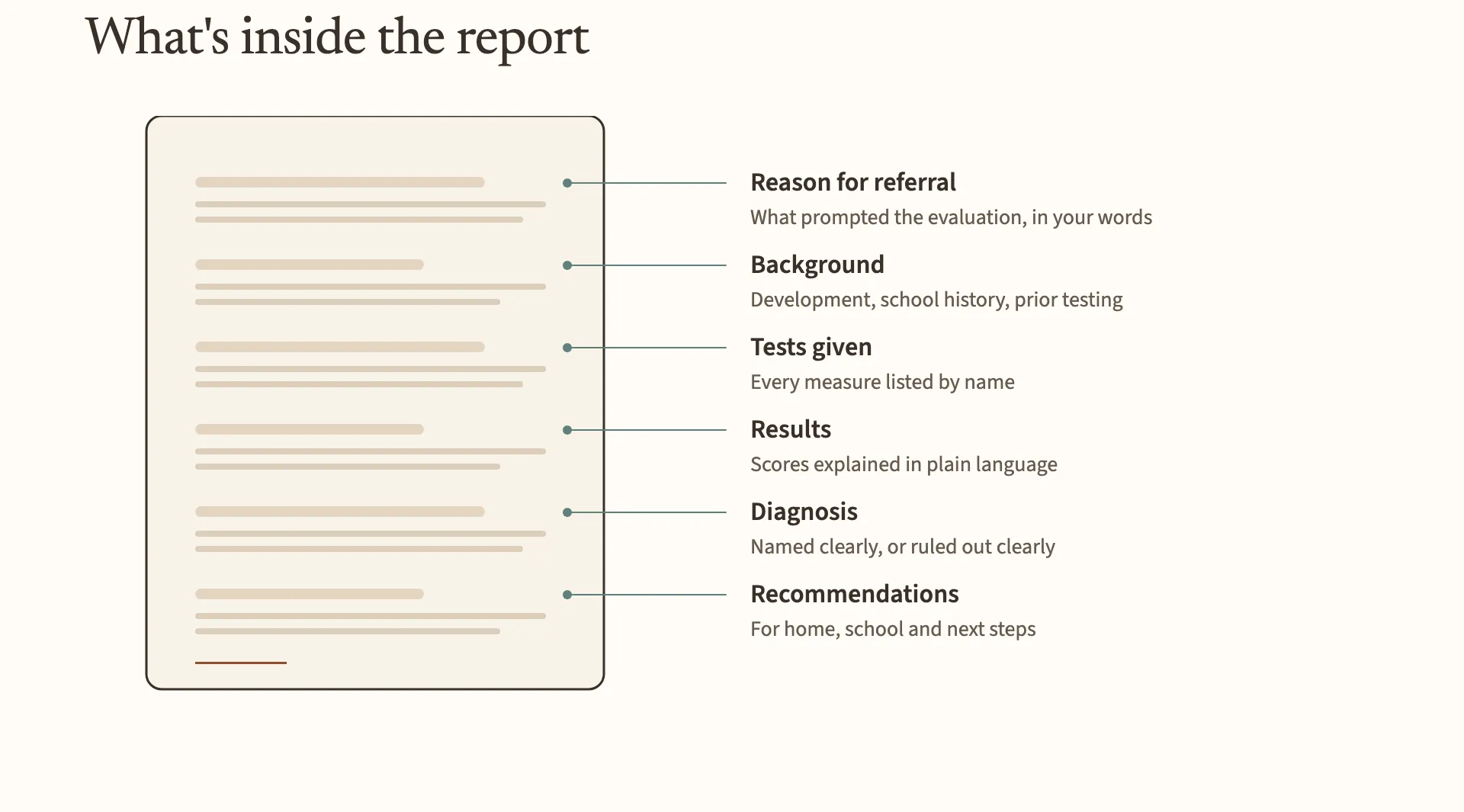
- A written report in plain language, with scores explained
- A diagnosis if one fits, and a clear explanation if one doesn't
- Specific recommendations for school and home
- A feedback session to go through the results together
Who you'll see
Licensed Clinical Psychologist
- California license PSY 36605 · Verify with the state (opens the California DCA license search)
- Doctoral training in clinical psychology
- About about eight years of psychological and neuropsychological assessment experience
- Born and raised in Redondo Beach
Serving families in Hermosa Beach, Redondo Beach, Manhattan Beach, Torrance, Palos Verdes and the South Bay.
Questions about testing
How long does an evaluation take from start to finish?
Which evaluation does my child need?
What should we bring to the intake appointment?
Do we need a referral from a doctor or school?
Who sees the results?
Not sure testing is the right step?
A free consultation with Dr. Paul is the easiest way to find out. No commitment.